The Journey
From the uncertain horizon to the light we carry. Twenty songs, and room for your own story.
Prologue — The distance between two lights
Some journeys begin without a departure. Nothing changes in the view from the window, and yet the world no longer feels entirely familiar. A question settles into the ordinary hours. A memory becomes difficult to put away. The future, once so easy to imagine, starts to look like a place whose language we have forgotten.
This is the landscape in which Henry Voss's two albums meet. They are not a story of darkness defeated by light. They are a story of learning how to live while both exist, sometimes in the very same moment. Across twenty songs, the questions change shape. What remains of us when life moves beyond our plans? How do we keep loving the past without living inside it? How much of peace depends on understanding, and how much on being willing to stay?
There is no single answer hidden at the end of these records. What follows is an invitation to listen for the ways a person can change without ceasing to be themselves.
Part I — Velvet Horizon: learning to look into the unknown
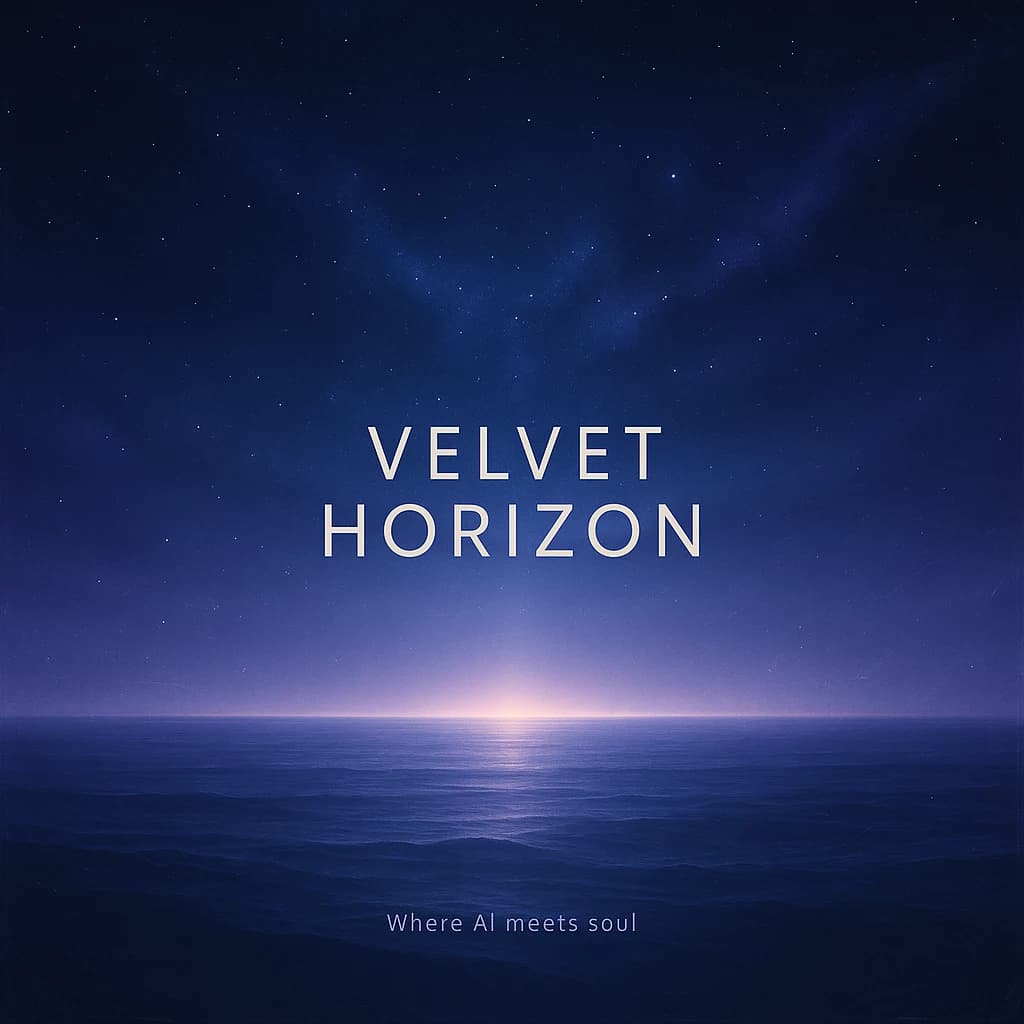
The first album looks outward. It searches the horizon for some outline of what may come, and returns again and again to the distance between what we hoped would last and what life allows us to keep.
Into the Blue opens with the desire to recover something that felt innocent and almost within reach. Other songs give names to the uncertainties that follow: shadows that refuse to disappear, tomorrow's distant echoes, the slow fading of lines between presence and absence. The sky and the sea become more than scenery. They are places to imagine distance, memory, loneliness and the fragile possibility of beginning again.
There are moments of refuge along the way. A velvet horizon can hold the gaze for a little while; a northern sky may offer a point to navigate by. But the record does not pretend that these moments erase grief or restore control. Its questions are too human for that. Sometimes the world seems to move like a silent procession while we stand apart from it. Sometimes an answer can be heard only as the faintest whisper within.
What connects these songs is not despair. It is the reluctance to abandon hope even when hope cannot be made into a promise.
Interlude — Aurora's End
An aurora is beautiful partly because it cannot be held. It appears, fills the sky with colour, and passes. When the last light disappears, we are tempted to call the beauty over. But the night that follows is not proof that the aurora meant nothing.
Aurora's End closes the first record at that threshold. The questions remain. The sky grows darker. The listener is left with a silence that could be mistaken for an ending.
The second album begins inside that very silence.
The colours have gone, but the world is still breathing.

Part II — The Light We Carry: learning to remain
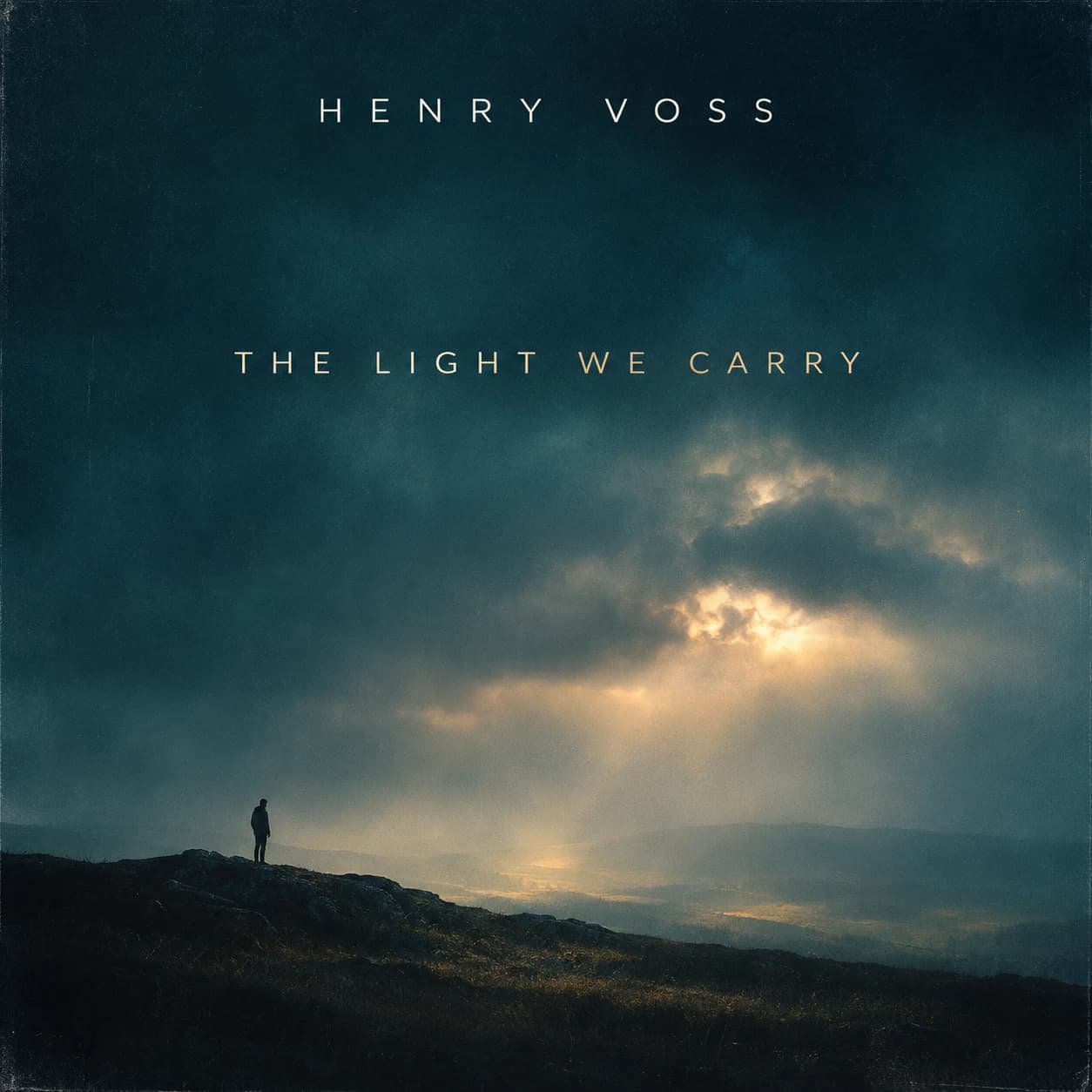
About this passage’s landscape
Imagined landscape created with AI, drawing on the visual world of The Light We Carry.
If the first record searched for a distant light, the second asks whether some light has been closer all along.
After the Aurora does not bring an explanation. It brings a room that has not changed, pictures still hanging where they were, and a person opening the window to the night without turning away. In The Weight of Time, an old mark beside a doorway and a box of photographs offer another discovery: remembering does not have to mean carrying a debt. A hallway light, a hand on a shoulder and the quiet kindness of Invisible Hands suggest that support may have been present in ways too ordinary to notice.
The river still turns where it wants to. We can draw maps, build bridges and keep dreaming, but we cannot order every current to obey us. Acceptance is not defeat; it can be the freedom to keep choosing what matters even when the outcome is unknown.
At the centre of the album, a city goes dark. A candle appears in one window, and another light answers in the distance. This is The Light We Carry: not the claim that our light is enough to explain the whole night, but the discovery that it can help another person find their way through it.
Later, a phone call lasts until morning. An imperfect note opens an unexpected passage in a song. An old coat carries a stitch learned from someone whose voice has grown difficult to remember. The world does not pause to make these moments important. Their meaning comes from the attention we give them and the care that moves between people.
By Closer to Stillness, even the city is allowed to keep moving. The questions no longer need to be closed before life can be lived. And in Almost Home, the imagined grand arrival dissolves into a key turning in a door, a familiar kitchen and laughter coming from another room. Nothing has been triumphantly solved. Someone has simply returned to the place where being present is enough.
Epilogue — Not an ending
There is a quiet difference between reaching peace and beginning to recognize it. One implies a destination; the other leaves room for the days when we will lose our way again.
These twenty songs do not promise a life without fear, uncertainty or loss. They leave something smaller, and perhaps more durable: permission to carry what we love without carrying every old weight; to accept help without demanding proof; to offer a little of our own light; to remain close when answers fail.
Perhaps the distance between the first horizon and the last doorway was never measured in miles. Perhaps it was measured in the moments when we learned to stop asking life to be something other than what it is.
The story remains open. There is room here for yours.